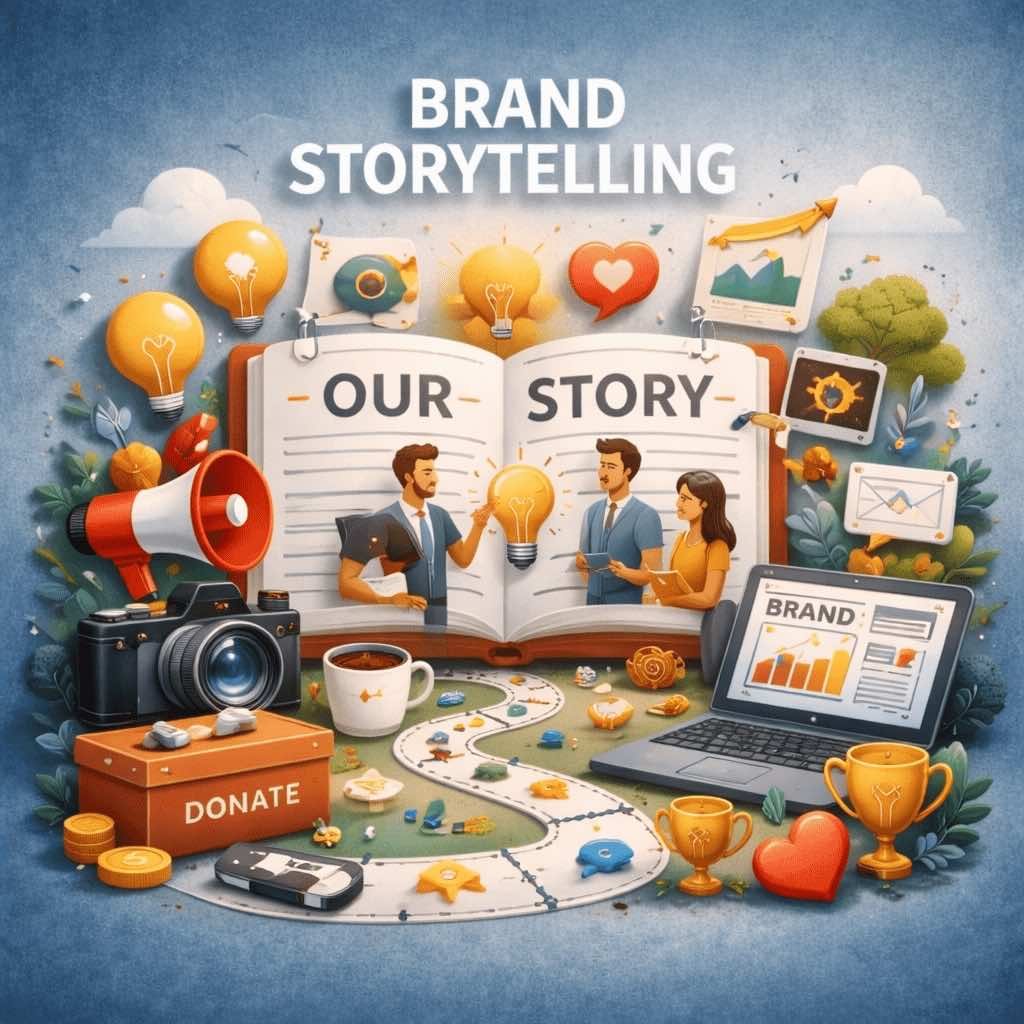
Step-by-Step Guide to Crafting Authentic Brand Stories That Resonate with Millennial and Gen Z Audiences
Introduction
Millennials and Gen Z grew up in a media environment defined by infinite choice, algorithmic feeds, and a healthy skepticism toward brands. They reward candor, cultural fluency, and evidence of lived values. For marketers, the question is not “how do we get attention?” but “how do we earn trust and participation?” This article outlines the communication challenge, the strategic role of authentic storytelling, and a step-by-step method to build brand narratives that convert attention into advocacy.
The Core Communication Challenge
Brands face a trifecta of headwinds when speaking to younger audiences:
- Trust deficit: Performative purpose, polished ads, and vague claims trigger skepticism and accusations of greenwashing or virtue signaling.
- Attention fragmentation: Short-form video, multi-screening, and social search compress time-to-relevance. Content must signal value in seconds.
- Participation over persuasion: Millennials and Gen Z expect to co-create culture. One-way broadcasts feel out of touch compared with duets, stitches, and community-led formats.
Compounding the issue, privacy shifts reduce third-party targeting advantages, elevating the importance of first-party relationships and brand meaning. The communication challenge is to translate brand truth into stories that are credible, native to platform cultures, and participatory—while still laddering up to measurable growth.
Strategic Role of the Concept
Authentic brand storytelling acts as a bridge between brand building and performance marketing. Rather than leading with claims, it demonstrates values and utility through human narratives. Strategically, it:
- Builds memory structures: Consistent, emotion-led stories create distinctive mental availability that lowers acquisition costs over time.
- Transforms customers into contributors: Inviting user and creator voices shifts the brand from monologue to network, increasing reach and credibility.
- De-risks purpose: Grounding claims in transparent proof points—people, processes, and consequences—converts “purpose” from posture to practice.
- Aligns to platform logic: Story formats mirror native behaviors (e.g., TikTok challenges, IG Reels how-tos, YouTube mini-docs, Discord AMAs), increasing distribution without heavy media spend.
In short, authentic storytelling operationalizes trust at scale and turns culture fit into commercial advantage.
Practical Applications
Use this eight-step method to craft and distribute stories that resonate with Millennials and Gen Z.
-
Clarify your inconvenient truth
- Audit receipts: What can you show, not just say? Founder decisions, supply chain choices, employee practices, customer outcomes.
- Define the non-negotiables: Values you will uphold even when it hurts short-term metrics.
-
Map audience jobs and subcultures
- Jobs-to-be-done: What functional and emotional jobs do you solve? (e.g., save time, signal identity, reduce anxiety)
- Subculture scan: Identify micro-communities (e.g., studytok, sneakerheads, climate optimists) and their norms, humor, and taboos.
-
Choose a narrative arc and point of view
- Customer-as-hero: Use arcs like Before–After–Bridge or Truth–Tension–Transformation to spotlight real transformations.
- POV matters: Speak with specificity. Trade generic claims for situated stories anchored in place, people, and stakes.
-
Source real voices
- UGC and creators: Commission micro-creators native to the subcultures you map. Prioritize lived experience over follower count.
- Employee storytellers: Engineers, baristas, or service reps can humanize complex topics with behind-the-scenes content.
-
Prototype native formats
- TikTok/Shorts/Reels: 6–30s hooks, jump cuts, captions-on, meme literacy. Use stitches/duets to ride cultural moments.
- YouTube: 4–8 minute mini-docs and explainers to deepen credibility and search visibility.
- Community platforms: Host AMAs on Discord, Reddit, or live streams to convert curiosity into loyalty.
-
Design distribution with participation in mind
- Give prompts: Clear calls to create—remixes, templates, challenges—so audiences can add their chapter to your story.
- Creator collaborations: Co-develop concepts; let creators retain their voice. Approve guardrails, not scripts.
-
Measure meaning, not vanity
- Qualitative signals: Comment themes, saves-to-views ratio, stitch/duet rate, sentiment, and community questions.
- Business impact: Assisted conversions, branded search lift, cohort LTV, and creative-level contribution to CPA.
-
Iterate and institutionalize
- Creative sprints: Weekly learnings-to-actions loops. Archive winning motifs and narrative devices in a living playbook.
- Governance: Lightweight approval flows to protect authenticity without gridlocking speed.
Differences by cohort nuance execution. Gen Z favors lo-fi aesthetics, humor, and radical transparency; they value participatory formats and are quick to fact-check. Millennials respond to utility, craft, and nostalgia alongside values alignment. Both cohorts demand inclusion and expect receipts for sustainability and social claims.
Implementation Challenges
-
Internal risk aversion
- Challenge: Legal and brand teams default to polishing away the humanity that creates trust.
- Solution: Pre-approve risk tiers, creator guidelines, and redline topics. Use sandbox pilots to prove safety and ROI.
-
Trend chasing vs. timelessness
- Challenge: Chasing every meme dilutes identity and burns teams out.
- Solution: Align trends to core narrative pillars. If a trend cannot express a pillar, pass.
-
Consistency across channels
- Challenge: Fragmented voices from agency and in-house teams confuse audiences.
- Solution: Build a narrative system: three pillars, proof points, and repeatable storytelling devices that flex per platform.
-
Measuring what matters
- Challenge: Over-indexing on views/CPMs ignores long-term brand lift and community effects.
- Solution: Pair platform metrics with brand search, sentiment, and incrementality tests. Create a shared scorecard.
-
Authenticity at scale
- Challenge: As volume grows, content risks feeling templated.
- Solution: Rotate real protagonists (customers, employees, creators), refresh arcs, and maintain a 70/20/10 portfolio (core/repeatable/experimental).
-
Ethical storytelling
- Challenge: Tokenism or consent gaps when spotlighting communities.
- Solution: Obtain explicit permissions, compensate fairly, ensure representation behind the camera, and invite feedback loops.
Conclusion
Authentic storytelling is not a copy style; it is an operating system for modern brand communication. By starting with verifiable truths, centering real people, and designing for participation, brands can earn trust with Millennials and Gen Z while improving marketing efficiency. The step-by-step approach—clarify truth, map subcultures and jobs, choose a narrative arc, source real voices, prototype native formats, orchestrate participatory distribution, measure meaning, and institutionalize learning—translates strategy into action. The result is a story engine that compounds: stronger community, lower acquisition costs, and brand equity built on proof rather than posture.
Related Reading
- Advanced Tips for Storyboarding Your Brand Storytelling Videos to Maximize Viewer Retention
- Leveraging Video SEO to Increase Organic Traffic From YouTube Search and Google Video Results
- How to Measure the ROI of Corporate Film Making for B2B Marketing Campaigns